Cold-Linked BH2 Pathway Extends Roundworm Lifespan, but Human Benefits Remain Unclear
Cold-grown worms produced more BH2 and lived longer. Human cell findings are promising, but they don’t show that supplements slow aging in people.
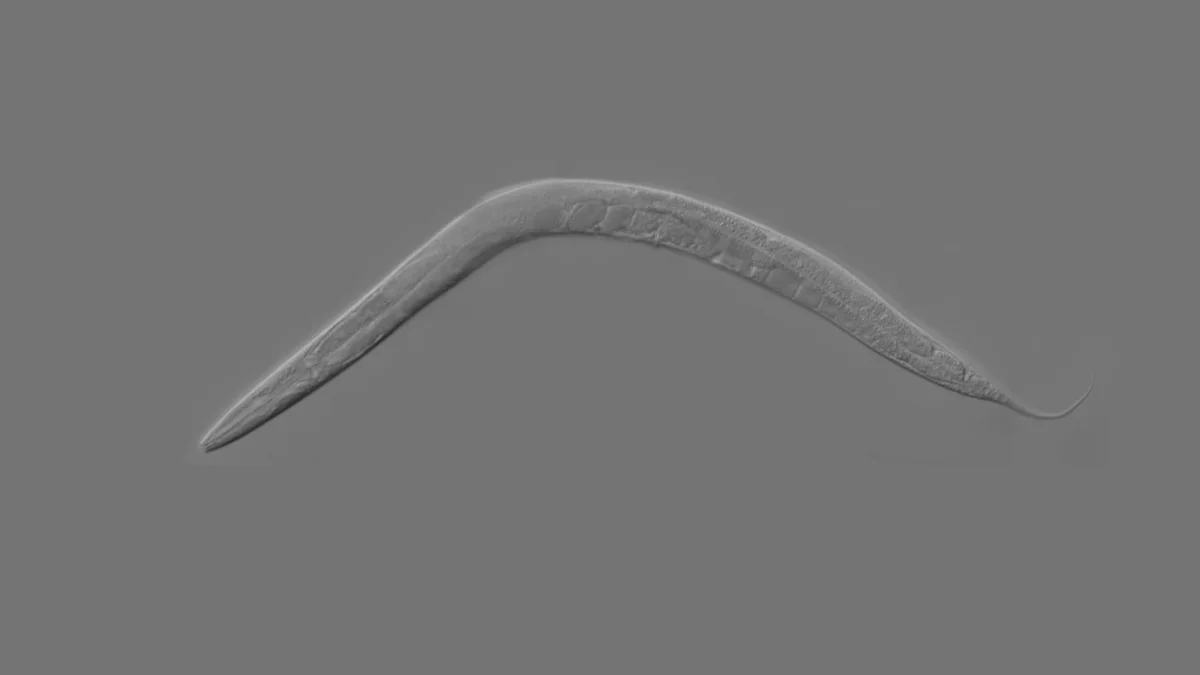
A molecular signal made by muscle may help explain why cooler conditions extend lifespan in some animals. In a new study, roundworms kept at a moderately lower temperature produced more BH2, a molecule that helps enzymes work, and lived about 15 percent longer. The work also found effects in human neurons grown in the lab, but it doesn’t show that cold exposure or BH2 supplements slow aging in people.
That distinction matters because cold exposure is often promoted for benefits such as weight loss, stronger immunity or slower aging. Evidence for those claims remains limited. Researchers have observed links between temperature and lifespan for more than a century: modestly lowering ambient temperature can extend the lives of roundworms, fruit flies and mice. The new study offers a specific biological pathway that could help account for some of that effect.
From muscle to other tissues
Researchers led by David Vilchez at the University of Cologne compared C. elegans roundworms raised at 20 degrees Celsius (68 degrees Fahrenheit) with worms kept five degrees cooler. BH2 levels rose sharply in the colder group. When the researchers genetically blocked BH2 production, the worms no longer gained the extra lifespan associated with cooler conditions.
The team traced much of the BH2 production to muscle. The molecule then traveled to other tissues, including the intestine and brain. There, it shifted into another form that prompted cells to produce more tyrosine, an amino acid found in foods such as meat, fish, dairy and soy. Feeding tyrosine to worms that could not make BH2 also extended their lives, even at standard or warmer temperatures.
The findings put muscle in a wider role than movement alone. Muscle may release chemical signals that affect how other tissues function. Researchers Hanseul Lee and Seung-Jae Lee of the Korea Advanced Institute of Science and Technology, who were not involved in the work, described the muscle metabolome—the collection of molecules produced by muscle—as a possible source of signals linked to longevity.
In human neurons grown in the lab, BH2 treatment helped cells withstand toxic protein clumps associated with Huntington’s disease, amyotrophic lateral sclerosis and dementia. The treated cells also better maintained protein homeostasis: the balance involved in making, folding and clearing proteins. These experiments point to a possible research lead for neurodegenerative disorders. They cannot establish that BH2 prevents disease or improves health in people.
What cold research has found so far
Temperature has been studied alongside other influences on aging, including genetics, diet, exercise and exposure to harmful substances. Hibernating mammals offer one clue: some spend months with lower body temperatures and slower metabolism, and research on yellow-bellied marmots has found that biological aging appears to stall during hibernation. These observations helped inspire the rate-of-living theory, which proposes a connection between lower metabolism and longer life. Current research is examining more specific ways that cooler conditions may affect aging-related cell processes.
Several possible mechanisms have emerged, though the evidence varies. Cold can activate brown fat, a tissue rich in mitochondria, and increase energy use. In a small study involving 12 people exposed to mild cold for up to eight hours, most showed signs of improved blood sugar regulation. That was a short-term result, not evidence that cold exposure offers lasting protection from aging or disease.
Other studies suggest that cold may increase the number of mitochondria, reduce some inflammatory signals, or slow the buildup of reactive oxygen species, molecules that can damage cell components such as DNA. Whether these effects protect people from age-related decline remains uncertain. In 2023, Vilchez and colleagues also reported that moderately cold conditions increased activity of the proteasome, a cell system that clears unwanted proteins, in both roundworms and human cells. The team found that this cleanup system broke down proteins prone to forming disease-related clumps.
Why a supplement is not the next step
The new results raise the possibility of copying some effects of cold through a treatment that acts on the BH2 pathway. But a pill based on these findings is a long way off. The study’s lifespan result came from worms, and its human experiments used cells in a lab. Neither can tell us whether taking BH2 or tyrosine would help people live longer or avoid neurodegenerative disease.
There are also safety questions. In mammals, the balance between BH2 and its active form helps regulate reactive oxygen species. Supplementation could disrupt that balance and cause cells to produce more damaging molecules. Because BH2 supports the work of multiple enzymes, changing its levels might also have effects researchers have not yet identified.
An existing medicine used for a metabolic condition can affect this pathway. Studying health information from people who take it could help researchers test whether the mechanism is relevant in humans. That would still be different from proving that the medicine slows aging, since patients and treatment outcomes can differ in many ways.
For now, the study gives researchers a more precise question to pursue: can signals originating in muscle influence aging and protein handling elsewhere in the body? Its findings support further work on metabolite-based treatments, particularly for disorders involving harmful protein buildup. They don’t support buying BH2 or tyrosine supplements as a way to extend life. Human studies will need to establish whether this pathway matters in people, and whether it can be changed safely.