Menopause-Related Dry Eye Can Trigger Watery Eyes: What May Help
Hormonal changes can disrupt the tear film and make eyes water in wind. Small studies suggest intentional blinking and certain supplements may help.
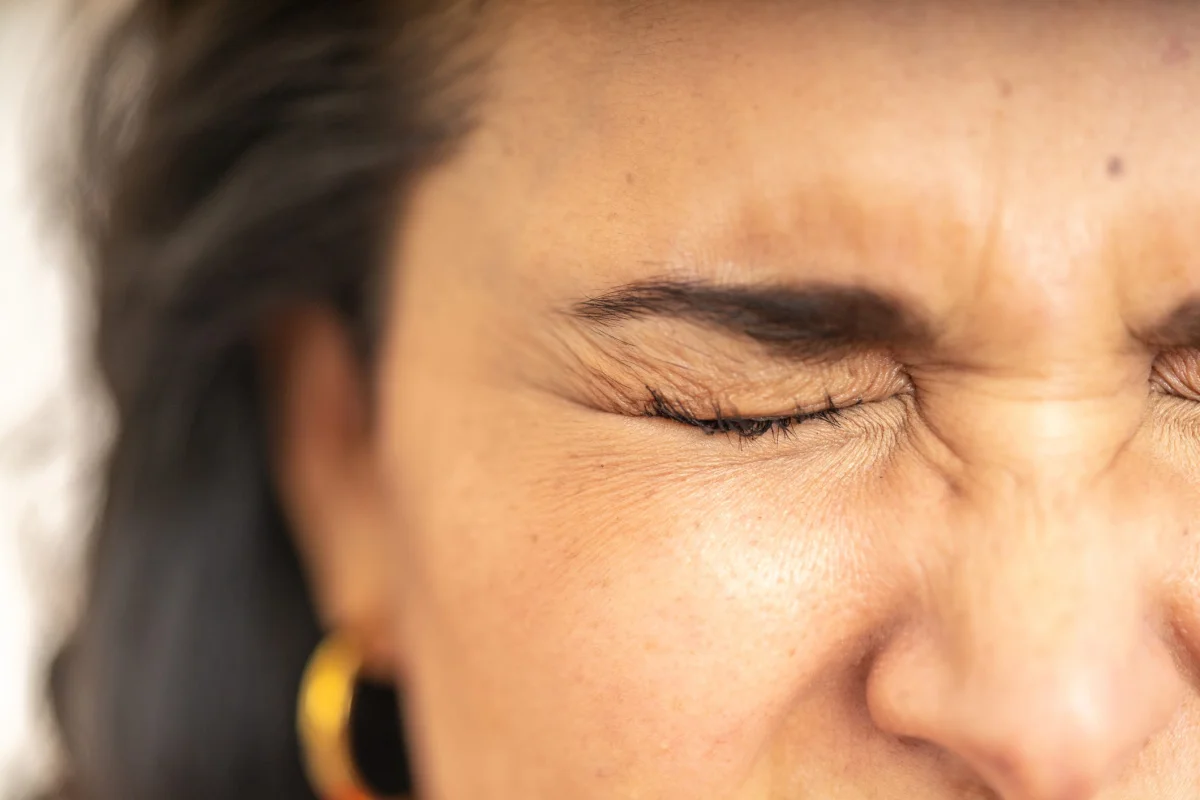
Menopause can leave the eyes feeling dry while making them water in the wind. That combination may seem contradictory, but it can happen when changes to the tear film make it evaporate too quickly. The experience described here points to intentional blinking as a simple measure that may ease symptoms for some people, while evidence for supplements comes from two clinical trials of a particular ingredient blend.

Why dry eyes can water
Dry eye symptoms are strongly associated with menopause and hormonal changes, says Joseph J. Allen, an optometrist in Virginia. Marni Robins, an optometrist and instructor of ophthalmology and visual sciences at the University of Maryland School of Medicine, explains that estrogen, progesterone and testosterone influence components of the tear film. Shifts in hormone levels, feedback mechanisms and receptor sensitivity can change the tear film’s balance.
The tear film contains oil, water and mucus. It protects the eye’s surface, but if its oil component changes, tears may evaporate more quickly, Allen says. Wind can speed that process. In response, the body may produce “reflex tears” to protect the eye, causing sudden watering even when the underlying problem is dryness.
Screen use may add to the problem. People tend to blink less fully while staring at screens, Allen says, which can make it harder to spread tears evenly across the eye’s surface. A complete blink helps recoat that surface.
Intentional blinking: a low effort option
Allen suggests taking time for deliberate, complete blinks. He recommends closing the eyes fully several times, rather than relying on quick, partial blinks. This is a practical idea, but the evidence base is still limited.

A study by British researchers, published in 2025 in Contact Lens and Anterior Eye, examined a routine for people with dry eye: close the eyes for two seconds, squeeze for two seconds, then open them. Participants repeated the sequence 15 times, three times a day. The study reported a reduction in dry eye symptoms. The source does not provide the number of participants or enough detail to assess the size of the effect, so the result should be treated as early evidence rather than a settled treatment recommendation.
The writer who tried intentional blinking reported noticing less watering in breezy conditions after several days. That personal experience is encouraging, but it can’t show how well the technique works for other people or separate its effect from other changes. If trying complete blinks, avoid squeezing hard enough to cause discomfort.
What the supplement research says
The article also describes a daily soft gel supplement containing lutein, zeaxanthin isomers and curcuminoids, with ingredients including turmeric extract, linseed oil, marigold extract and olive oil. Two clinical trials, published in 2021 and 2024, studied this particular blend. Both reported improvements in measures such as tear production, tear stability and quality, ocular surface damage, inflammation and dry eye symptoms.
Those findings apply to the blend studied in those trials. They don’t establish that every eye health supplement has the same effects, or that supplements will help every person with dry eye. The source does not state the trials’ participant numbers or provide enough information to judge how large or lasting the benefits were. Allen says it may take about two months to see an effect from supplements, but that timing should not be taken as a guarantee.
Supplements can also be unsuitable for some people or interact with medicines. The article advises discussing them with a doctor before starting. A doctor or pharmacist can help consider whether a product fits a person’s health history and current medicines.
When to ask about other options
Artificial tears and changes to blinking habits may not be enough for everyone. Robins describes other options that an eye care professional may consider, including prescription drops that reduce inflammation on the eye’s surface and punctal plugs, which block tear drainage so tears remain on the surface longer. Allen also mentions prescription drops such as Xiidra, which can address inflammation associated with dry eye. Robins says a nasal spray can stimulate the gland that produces natural tears.
These approaches have different uses and should be discussed with an optometrist or ophthalmologist, who can assess the symptoms and recommend suitable care. Persistent dryness or watering that interferes with daily life is a reasonable reason to seek that advice. The practical takeaway is that menopausal eye symptoms have several possible approaches, but personal experience and small studies can’t determine which one will work for an individual.