AI Hearing Aids in 2026: How Six Premium Platforms Handle Noise and Speech
Six premium hearing aid platforms use AI in different ways, from automatic speech enhancement to wearer controlled noise reduction.
The defining change in premium hearing aids in 2026 is not simply that more devices use artificial intelligence. The six major brands are applying it in different ways: some continuously manage sound for the wearer, while others preserve a more natural listening experience and let the wearer call for extra help. Those choices affect how devices handle speech, background sounds, movement and busy conversations.
For people choosing a hearing aid with a hearing care professional, the practical question is increasingly what the AI is designed to do—and how much control the wearer has. The systems described here are based on deep neural networks, or DNNs, trained to perform particular audio tasks. Their designs reflect different views about the balance between hearing speech clearly, staying aware of the surroundings and keeping sound comfortable.
“A deep neural network is very nice to have. You train them to do a very specific thing, but we’re not all training them to do the same things,” says Laurel Christensen, PhD, GN’s chief audiology officer. The distinctions matter because a system that works well for one listening preference or situation may not suit another as well. Product claims and company comparisons also need to be read in that context: the source reports manufacturer figures, but doesn’t provide study designs or independent comparisons for those claims.
Keeping speech and surroundings in balance
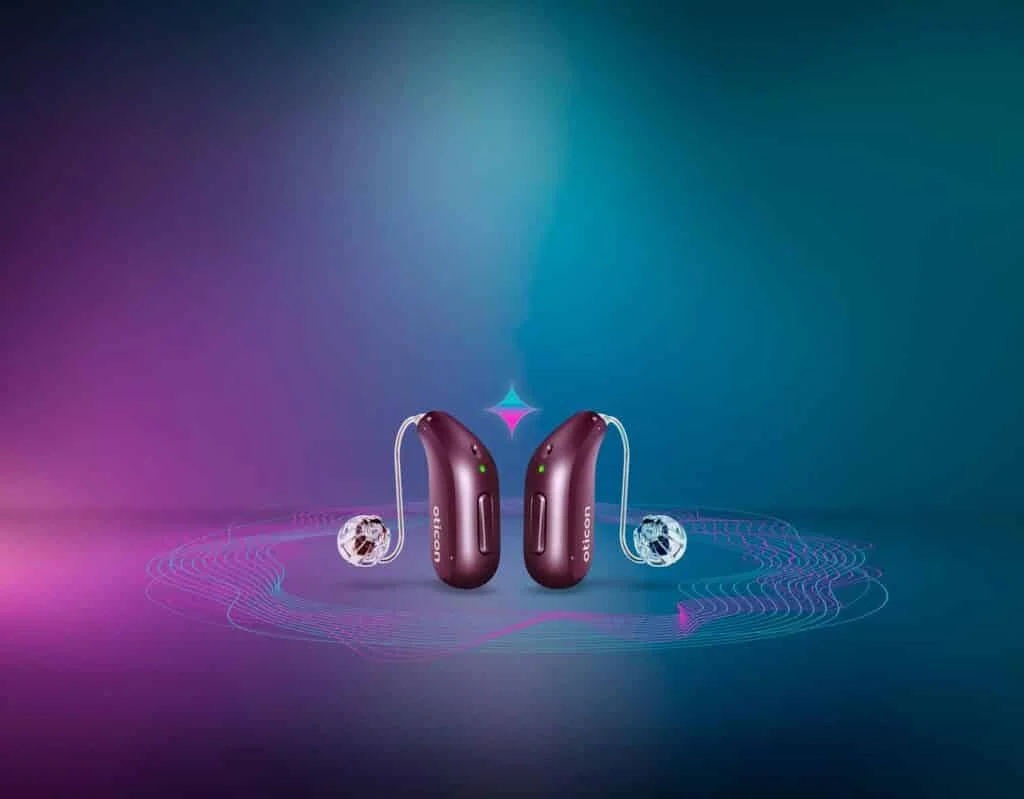
Oticon’s Reveal platform uses two DNNs at once: Speech AI to identify and enhance speech, and Context AI to preserve and balance surrounding sound. The approach follows the company’s BrainHearing philosophy, which holds that access to the broader sound scene matters alongside speech.
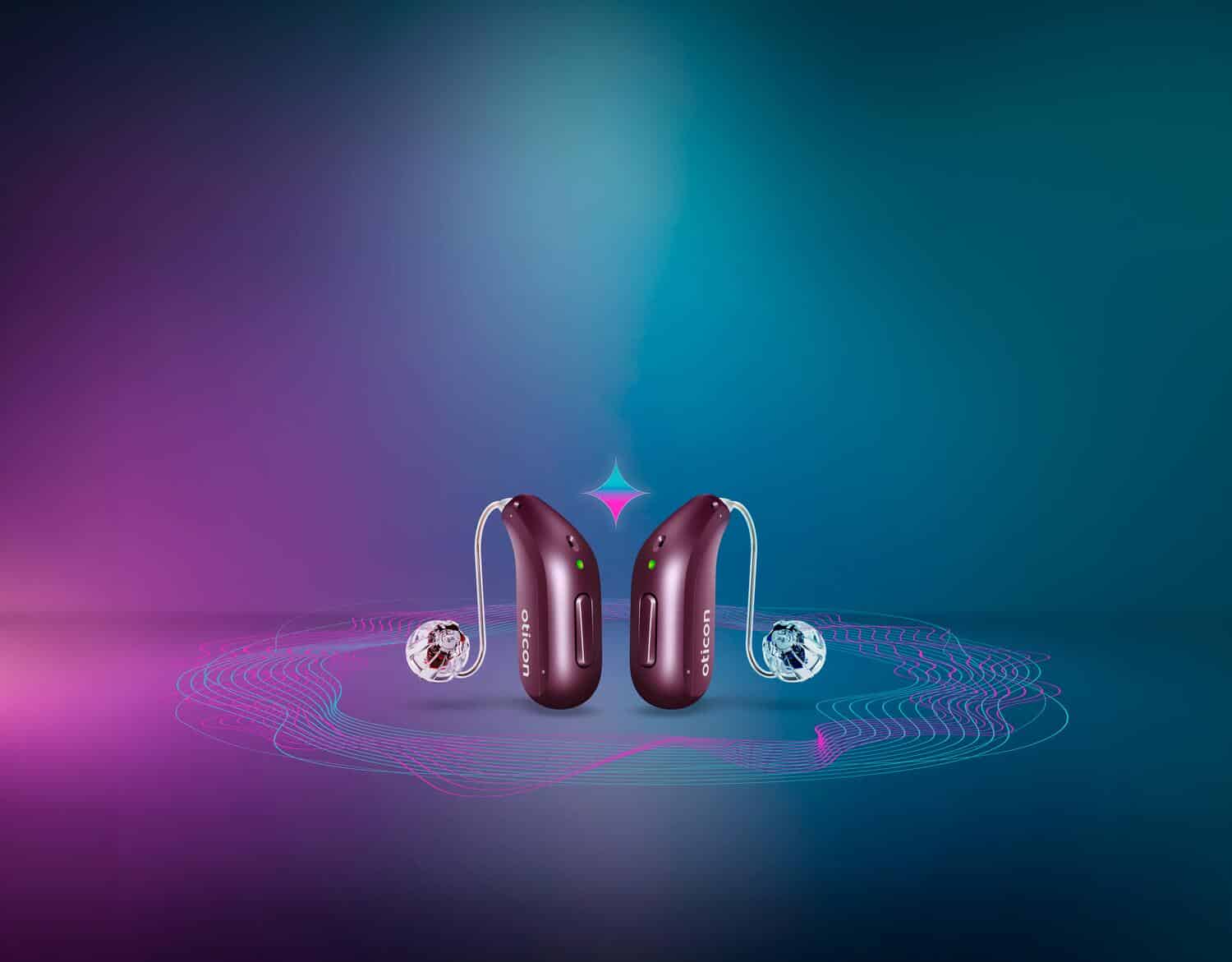
Rather than treating all non-speech sound as unwanted, the platform continuously adjusts the balance between speech and context as the listening environment changes. Susanna Løve, Oticon’s global director of commercial audiology, says that some sounds classified as noise may still offer useful context to the brain. She describes the system as adaptive rather than built around fixed listening modes.
Reveal also includes the Reveal Optimizer, a feedback management system. Løve says stable amplification helps the AI work effectively, since rapid processing changes can challenge feedback control. That makes the supporting audio system part of the AI’s performance, rather than a separate detail.
Automatic processing and speech from any direction
Phonak’s Eon platform pairs AutoSense OS AI 8.0 with Spheric Speech Clarity 3.0 on the HyperSonic chip. The two systems are designed to make decisions automatically: AutoSense monitors the sound environment and selects features, while Spheric Speech Clarity processes speech.
Christine Jones, AuD, a Sonova vice president, describes AutoSense OS as the device’s control center. The company says it analyzes the environment 700 times per second and activates features based on the scene and likely listening intent.
Spheric Speech Clarity 3.0 is designed to extract speech from any direction, rather than relying on the wearer to face a speaker as traditional beamforming systems often do. Phonak says this makes speech twice as likely to be understood and reduces listening effort by 35%. These are company reported figures; the source doesn’t give details about the testing behind them. The HyperSonic chip is also reported to make Eon 25% smaller and 20% lighter than the previous generation while using power more efficiently.
Letting the wearer direct the focus
ReSound Sensia gives the wearer a more direct role in deciding what to hear. Its Intelligent All-Around system combines environmental classification, a four-microphone beamformer and a DNN for denoising, coordinated through ReSound’s AcoustIQ technology.
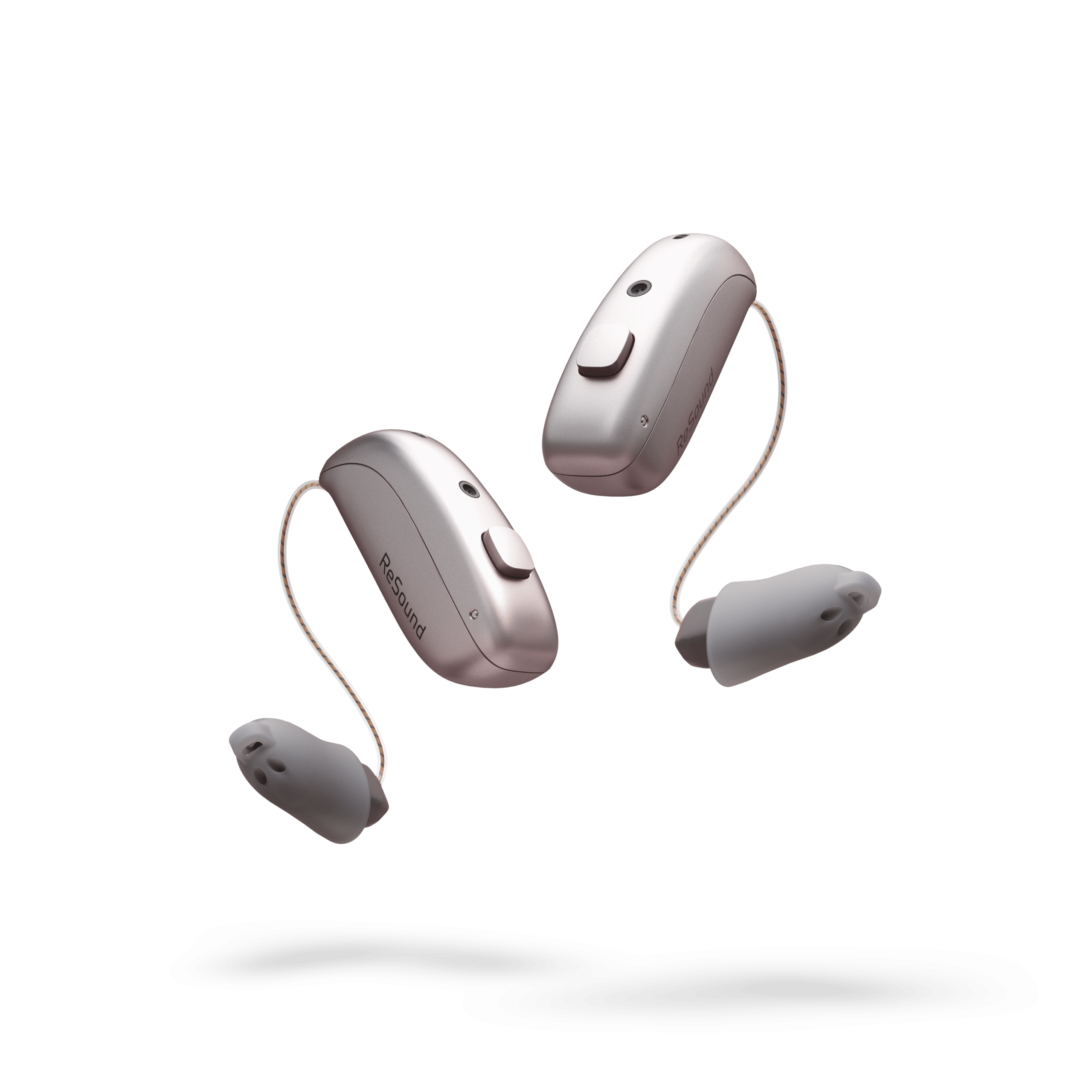
The beamformer helps the DNN identify speech in front of the wearer as the prominent signal. Turning toward a conversation can therefore help guide the system’s focus. Christensen says this addresses a limitation of denoising systems that may enhance the most prominent voice without knowing whether it’s the one the wearer wants to hear.
Sensia also uses different approaches depending on the sound. In noise without speech, it uses perceptual noise reduction for comfort; when speech is present, it switches to DNN denoising. GN says this design helps avoid audio artifacts that can arise when a system trained for speech in noise is used in a noise-only setting.
Processing group conversations and movement
Signia’s MaX platform targets dynamic settings with several people talking. Its Acoustic Intelligence system coordinates four task-specific DNNs: Speech Detection, Own Voice Detection, Scene Analysis and Noise Processing. It considers speech, background sound, the wearer’s voice and movement cues as it adjusts processing, without relying on fixed scene modes.

Own Voice Processing AI is designed to recognize the wearer’s voice without in-clinic calibration, with the aim of making it sound more comfortable and natural. MaX builds on RealTime Conversation Enhancement, first introduced in Signia IX. The company says the newer platform processes 75% more data points per second to track multiple conversation partners more precisely. Signia also reports that 97% of wearers perform better with MaX in noisy group conversations than with key competitors. The source doesn’t describe how those comparisons were conducted, so the figure should be understood as a company claim.
Combining hearing support with wellness tools
Starkey’s Omega AI+ uses a G4 Gen AI Neuro Processor and a Quad DNN Architecture. Its four DNNs are trained to support speech understanding, awareness of surrounding sounds, sound quality and listening comfort. An always-on DNN 360 system manages audibility, directionality and spatial awareness.
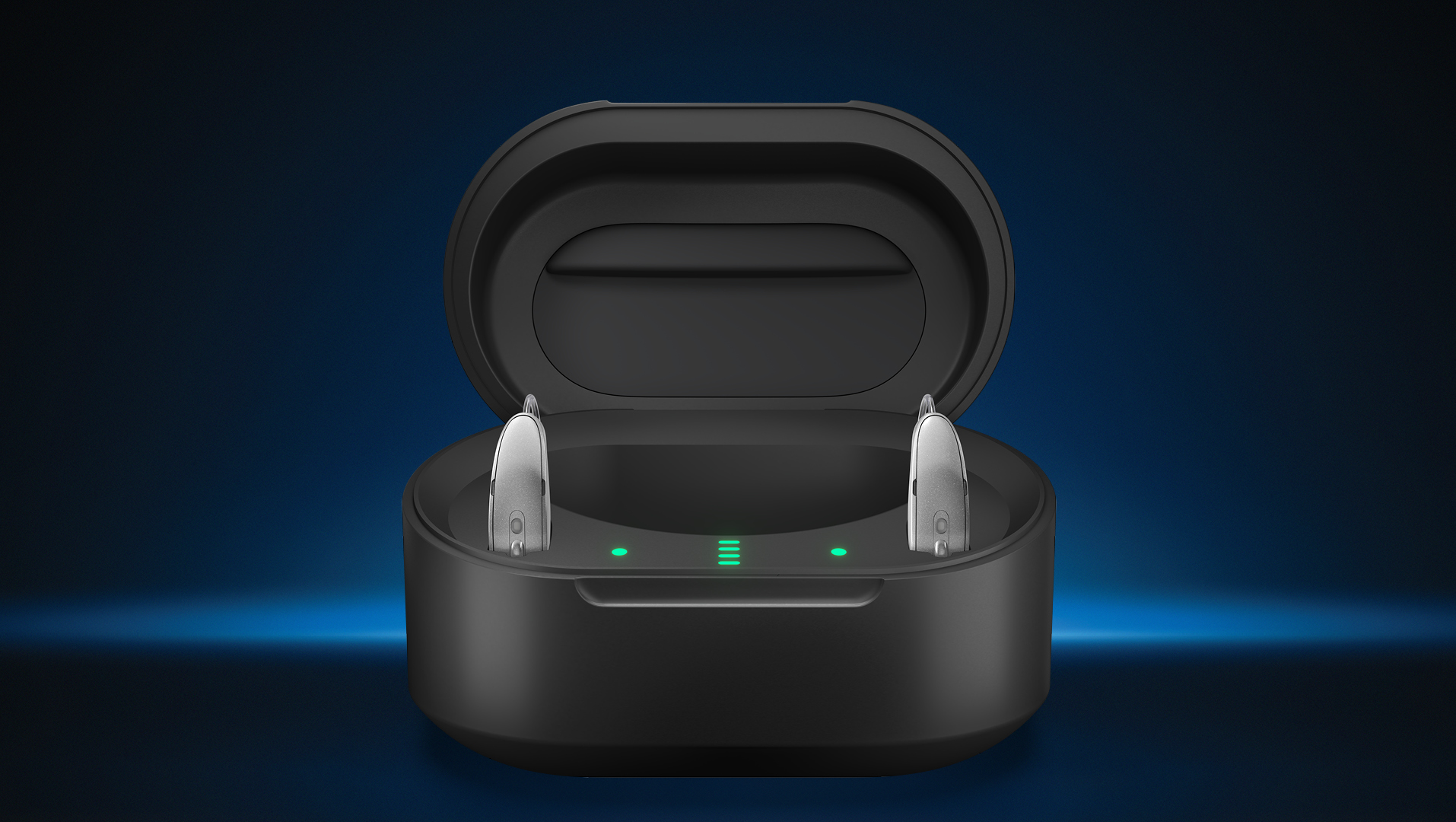
To preserve a sense of where sounds are coming from, Omega AI+ uses split-band directionality: microphones work omnidirectionally at lower frequencies and directionally at higher ones. The intent is to retain awareness of sounds around the wearer while reducing noise that can interfere with high-frequency speech cues.
The platform also introduces a DNN Dual Compressor, designed to balance fast and slow compression for speech clarity and comfort. Starkey chief hearing health officer Dave Fabry, PhD, says the design considers how people experience trade-offs in sound quality, speech intelligibility and spatial awareness, not just performance on a benchmark. The device also uses an inertial measurement unit to factor the wearer’s movement into microphone adjustments. Starkey says a sleep quality tracking feature, available in the U.S., is new to the platform.
Natural sound with AI on demand
Widex Allure AI takes a different route: its AI noise reduction is available when the wearer wants it, rather than changing the everyday sound experience continuously. The device runs on Widex’s W1 chip with Precision Hearing Technology and retains features including Allure PureSound with ZeroDelay technology, Speech Enhancer Pro and an Adaptive Dynamic Feedback Controller.
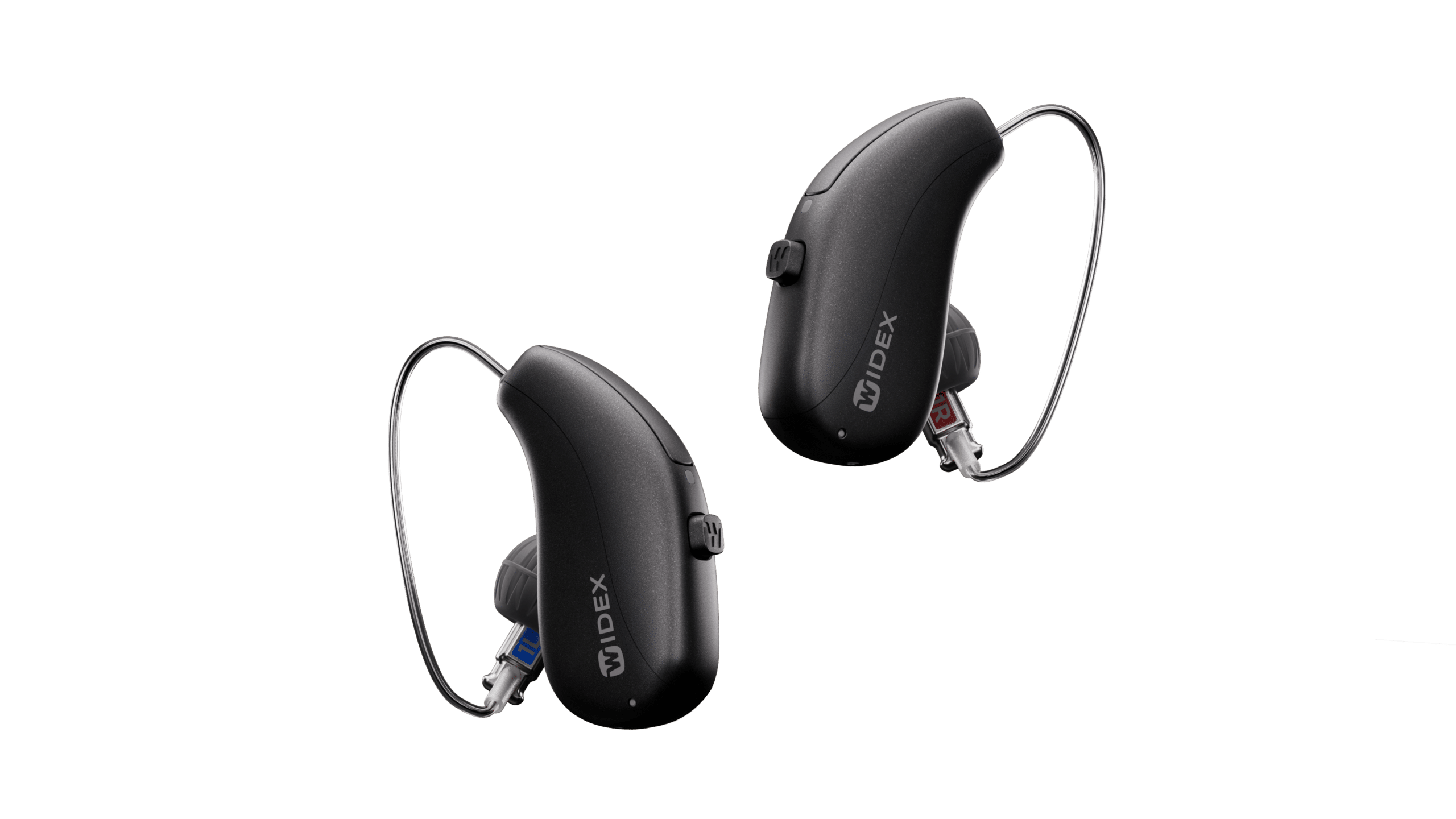
Everyday listening uses the Universal program. When the wearer wants additional support in a challenging environment, pressing the hearing aid button activates Clarity Boost, which engages a dedicated AI co-processor and a linear recurrent neural network designed for audio. Widex says the L-RNN processes sound efficiently with little delay. Its training also retains some environmental noise, aiming to reduce it to a comfortable level while keeping contextual sounds available.
What the different designs mean
These platforms show why the presence of AI alone tells a wearer little about how a hearing aid will sound or behave. One system may continuously automate scene changes; another may preserve context, respond to head direction or reserve stronger noise reduction for a button press. Personal listening needs and preferences remain central to discussing those differences with a hearing care professional.
The source also points to broader adoption of Bluetooth LE Audio and Auracast compatibility across more models. These technologies are intended to let compatible hearing aids receive audio broadcasts in public venues. As the platforms develop, the useful question will remain how each feature performs in real listening situations—and whether its balance of speech, comfort and environmental awareness suits the person wearing it.
Featured image: AI chip concept. Image: ID 353249873 © Ikorch007 | Dreamstime.com
===