Garmin Smartwatches Compared: Wellness, Running, Outdoor and Golf Features
Compare Garmin watches by wellness, running, outdoor and golf features, with battery life and health tracking limitations in mind.
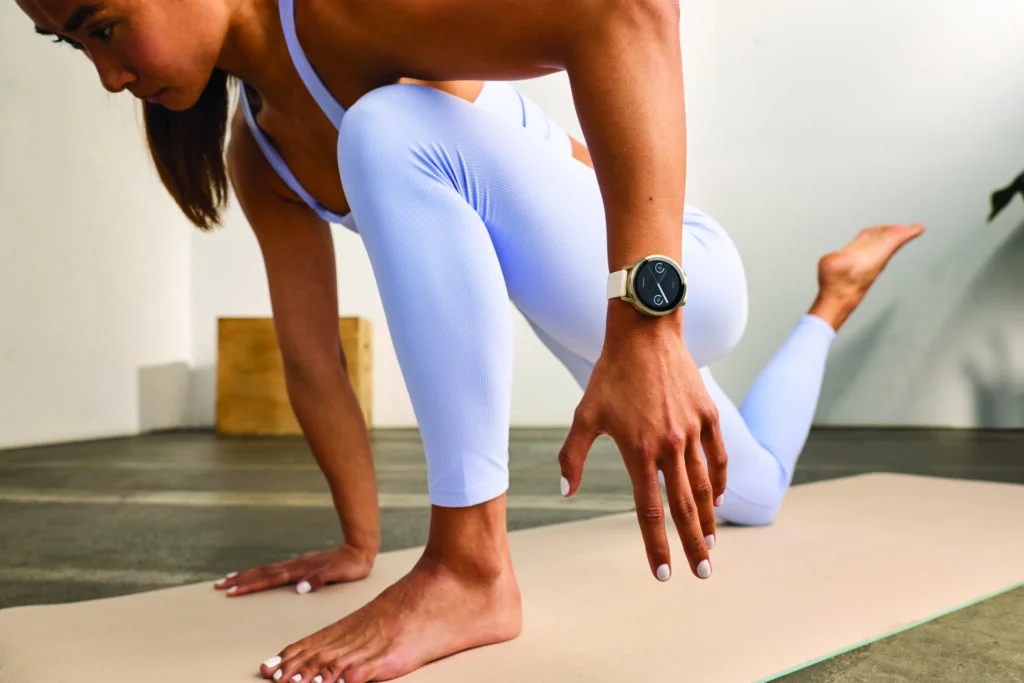
Choosing a Garmin smartwatch comes down to what you want it to do day to day. The range described here runs from compact watches for basic wellness tracking to models with detailed training tools, maps, golf features and satellite connectivity. Battery life, case size and display type also vary, so matching the watch to your routine matters as much as comparing feature lists.

These descriptions come from Garmin and outline product features, not independent comparisons of accuracy or performance. Health metrics can help people notice patterns, but they don’t diagnose conditions. Features such as ECG, menstrual cycle estimates and satellite messaging also have specific availability or use limits; check the details that apply to the model and region before relying on them.
Everyday wellness and fitness
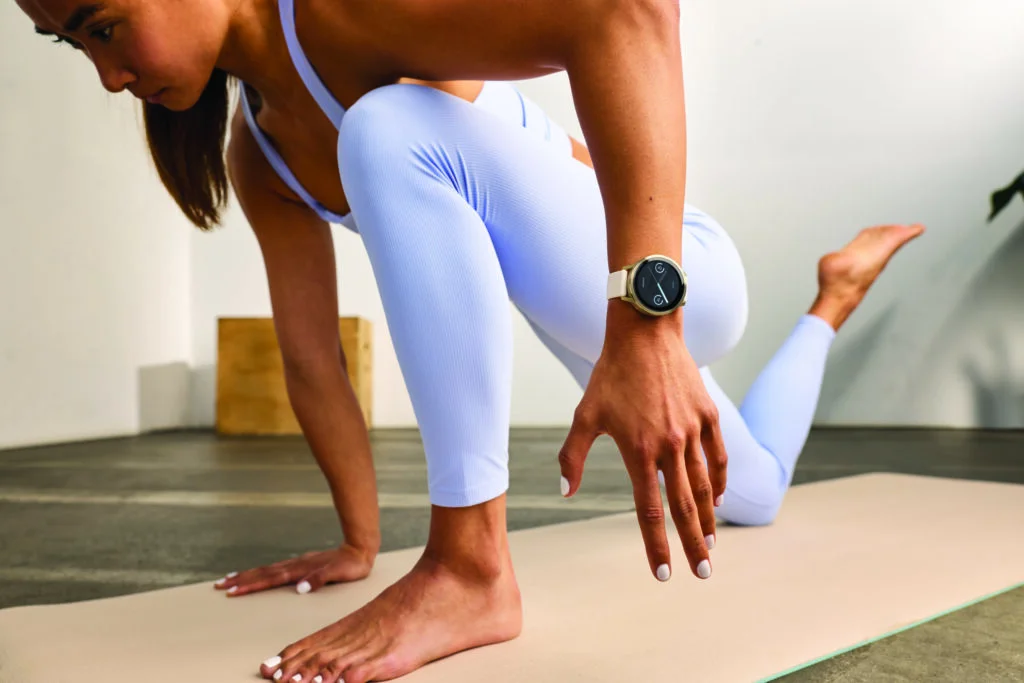
Lily 2 Active is the smallest option in this group, with a 38 mm case and a patterned lens that conceals its liquid crystal display until tapped. It tracks heart rate, sleep and Garmin’s Body Battery energy estimate, and includes women’s health features. Its stated battery life is up to nine days in smartwatch mode. These readings may help users follow personal trends, but Garmin’s accuracy information and the limits of wrist-based measurements are worth reviewing before treating a reading as a health conclusion. Garmin describes its sleep tracking features here.
vívoactive 6 adds a 42 mm AMOLED display and more than 80 preloaded sports apps. It is positioned for people who want to track activity in and out of the gym, with up to 11 days of battery life in smartwatch mode. Garmin Coach running and strength plans are included; some plans adjust in response to performance, recovery and health metrics. That can make the watch a useful training companion, although suggested sessions are still general guidance based on device data and won’t account for every health concern or circumstance.
Venu 4 combines a 41 mm or 45 mm AMOLED model with detailed health and fitness tracking, dozens of sports apps and Garmin Coach. It also has a speaker and microphone for calls when paired with a smartphone, plus a built-in LED flashlight. Garmin says the health features include skin temperature tracking, which it uses to refine period predictions and estimates of past ovulation. Cycle estimates are not a method for conception, contraception or birth control, and the watch is not a medical device. The ECG app is limited to select watches, regions and adults aged 22 or older; it can record a reading similar to a Lead I ECG and detect signs of atrial fibrillation or normal sinus rhythm. Anyone with a health concern should discuss it with a clinician rather than relying on a watch reading. Stated battery life is up to 12 days for the 45 mm model.
Venu X1 moves further into training and navigation. Garmin describes its 41 by 46 mm case as its thinnest, with a two-inch AMOLED display protected by a scratch-resistant sapphire lens. It includes detailed health and fitness insights, advanced running features, mapping, a flashlight, and a speaker and microphone. Stated battery life is up to eight days in smartwatch mode. For someone who wants wellness tracking alongside route guidance and training tools, it sits between the everyday fitness models and the more specialized running watches.
Running and multisport training

For people new to running, Forerunner 70 and Forerunner 170 Music offer built-in GPS for pace, distance and time, along with wrist-based heart rate and sleep monitoring. Both provide daily suggested workouts informed by performance and recovery after each run. Beginner-friendly Garmin Coach plans, including run-walk sessions, are available through the Garmin Connect app. A quick workout feature can also build a session around available time and desired intensity. Their cases are 43 mm and their displays are AMOLED. Garmin lists up to 13 days of smartwatch battery life for the Forerunner 70 and up to 10 days for the 170 Music.
The Music model can store songs and podcasts for listening through wireless headphones; a subscription may be needed for some content. It also supports Garmin Pay for contactless payments, subject to participating countries, payment networks and banks. Those features may be useful during a run, but the core distinction is the stored audio option.
Forerunner 570 is aimed at runners looking for more training detail. It offers training status, training readiness, multiband GPS support and adaptive plans from Garmin Run Coach. The watch has a speaker and microphone, an aluminum bezel and an AMOLED display, with 42 mm and 47 mm case choices. Garmin states up to 11 days of battery life for the 47 mm size. Training readiness and status can help organize a training routine, but they are estimates based on tracked data rather than a substitute for personal judgment or clinical advice.
Forerunner 970 adds a sapphire crystal lens and titanium bezel, with a 47 mm case and up to 15 days of battery life in smartwatch mode. Its advanced running tools include running tolerance, which can suggest a weekly mileage ceiling. Paired with a compatible heart rate monitor such as the HRM 600, the watch can provide running economy data, including step speed loss—an estimate of how much speed decreases at foot strike. It also has a flashlight, speaker and microphone, plus adaptive training plans for running and multisport events. Garmin’s running watch comparison gives more detail on that range.
Outdoor watches and long efforts
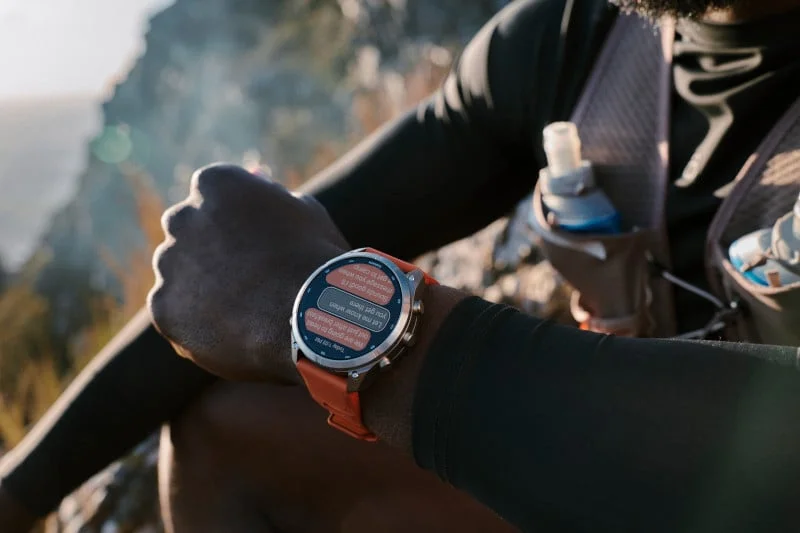
fēnix 9 is Garmin’s premium multisport GPS watch in this lineup. It comes in 43 mm, 47 mm and 51 mm sizes, all with AMOLED displays; the 51 mm size is listed for up to 29 days in smartwatch mode. Garmin describes a dive-rated build with leakproof metal buttons, a metal sensor guard, titanium bezel, flashlight and speaker and microphone. The watch combines health monitoring with training, planning and analysis features. Garmin Epic can record multiday activities as a single experience, which may appeal to people whose outings span more than one day.
fēnix 9 Pro offers a titanium case and bezel, with either an AMOLED display or a solar-charging transflective memory-in-pixel display designed for readability in sunlight. It comes in the same three case sizes. Garmin lists up to 31 days in smartwatch mode for the 51 mm AMOLED version, or up to 57 days with solar charging under stated light exposure assumptions. The Pro model adds inReach satellite and cellular connectivity in areas with limited or no mobile service. Using messaging or SOS features requires an active plan, and coverage and service availability vary by region and situation. Garmin notes that these features have limitations compared with other inReach devices. Anyone considering them for remote travel should review the service requirements and coverage information before relying on them. The watch also includes advanced fitness features and training statistics. More details on the fēnix 9 series are available from Garmin.
Enduro 4 is designed for ultramarathoners, trail runners and other endurance athletes. Its 51 mm case uses a sunlight-readable transflective memory-in-pixel display. Garmin lists up to 90 days in smartwatch mode and up to 320 hours in activity mode with solar charging; those figures rely on specified conditions and aren’t a guarantee of the same result for every user. The watch includes a flashlight and routable maps, which Garmin says pan up to 30% faster than the prior version. It supports more than 100 activities and can combine multiday tracking into one experience with Epic. Grade-adjusted features provide pace overviews across changing terrain, while stamina metrics and rowing and rucking tools add training detail.
Instinct 3 emphasizes durability, with a metal-reinforced bezel, fiber-reinforced polymer case and scratch-resistant display. It comes in 45 mm and 50 mm sizes, with either an AMOLED screen or a monochrome solar-charging display. On the 50 mm model, Garmin lists up to 24 days in smartwatch mode or potentially unlimited battery life with solar charging under its stated assumptions. A built-in flashlight is included. A version with tactical features adds tools such as night vision compatibility, rucking, stealth mode, which records distance and biometrics without location data, and projected waypoints. These specialized options are relevant to particular activities; most everyday users may find the standard outdoor and fitness features more pertinent.
tactix 8 is another purpose-built model, with leakproof buttons, a sensor guard, titanium bezel and scratch-resistant sapphire lens. It has a flashlight with white or green light; the white beam is disabled in night vision mode, while the green beam can be dimmed in that mode. Other specialized functions include rucking, jumpmaster activity, projected waypoints, dual-position GPS format, stealth mode, a kill switch, an Applied Ballistics solver and compatibility with night vision goggles. It comes in 47 mm and 51 mm case sizes, with AMOLED or solar-charging MIP display options. Garmin lists up to 29 days of smartwatch battery life for the 51 mm model, or up to 48 days with solar charging under its stated assumptions.
Golf watches
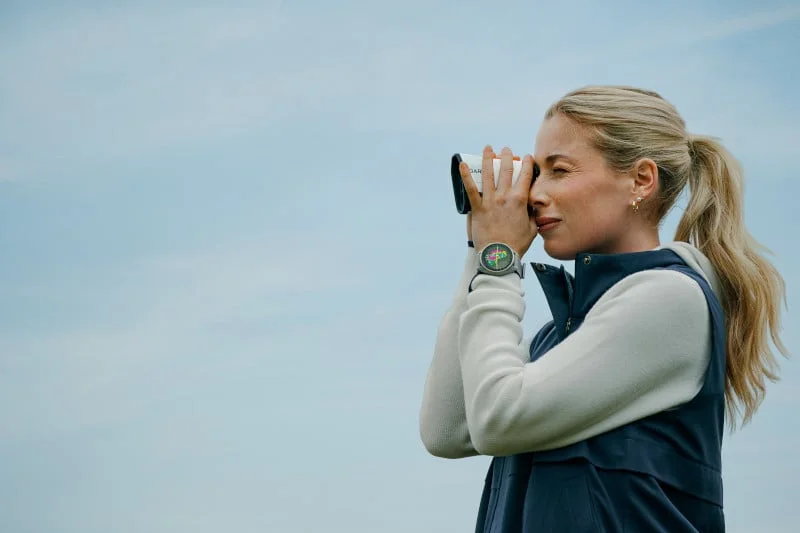
Approach S44 focuses on golf essentials in a 43 mm AMOLED watch, with up to 15 hours of battery life in GPS mode. Green View displays the shape of a green, and AutoShot can automatically track shot locations. Garmin cautions that lie and ball contact can affect tracking; putts aren’t tracked, and some shots near the green may be missed. A Garmin Golf membership adds features such as Premium CourseView maps, touch targeting and green contour data. The membership is an added consideration when comparing the available golf tools.
Approach S50 is designed for golf and general activity tracking. It displays yardages to greens, hazards and layups across more than 43,000 courses, and PlaysLike Distance adjusts yardage for elevation changes. The 43 mm AMOLED model is listed for up to 10 days in smartwatch mode. It also includes wellness features and preloaded activities for strength and mobility. A Garmin Golf membership can provide additional course features.
Approach S72 is the premium golf option, offered in 43 mm and 47 mm sizes. Garmin lists up to 20 hours on the course and up to 16 days with GPS off for the 47 mm model. Its features include swing metrics, a virtual caddie with a club-based dispersion chart, enhanced PlaysLike Distance that accounts for elevation and environmental conditions, and club suggestions based on performance and wind. It also has a flashlight, speaker and microphone, and a ComfortFit fabric band. Beyond golf, it tracks more than 100 activities and displays health and wellness metrics. Garmin’s golf watch range outlines other options.
What to compare before choosing
Start with the activities you expect to track most often, then compare the features that affect everyday use: case size, screen type, battery estimates and whether the watch needs a paired smartphone or paid service for a feature you care about. A smaller wellness watch may suit someone who values compact design and basic tracking; a runner may prioritize GPS and training plans; golf and outdoor models add tools aimed at those settings.
Health readings and training estimates are best treated as information to discuss, not diagnoses or guarantees. Garmin’s ECG app is not available on every model or in every region, and cycle tracking is not intended to guide pregnancy prevention or conception. If a reading concerns you, or you’re deciding how a wearable fits into care or training around a health condition, a clinician or pharmacist can help put it in context. You can browse Garmin’s smartwatch selection to compare models and their current features.