Why AI Safety Cannot Depend on a Single Emergency Switch
Advanced AI runs on distributed infrastructure and depends on human decisions, making oversight and safeguards more complex than a simple off switch.
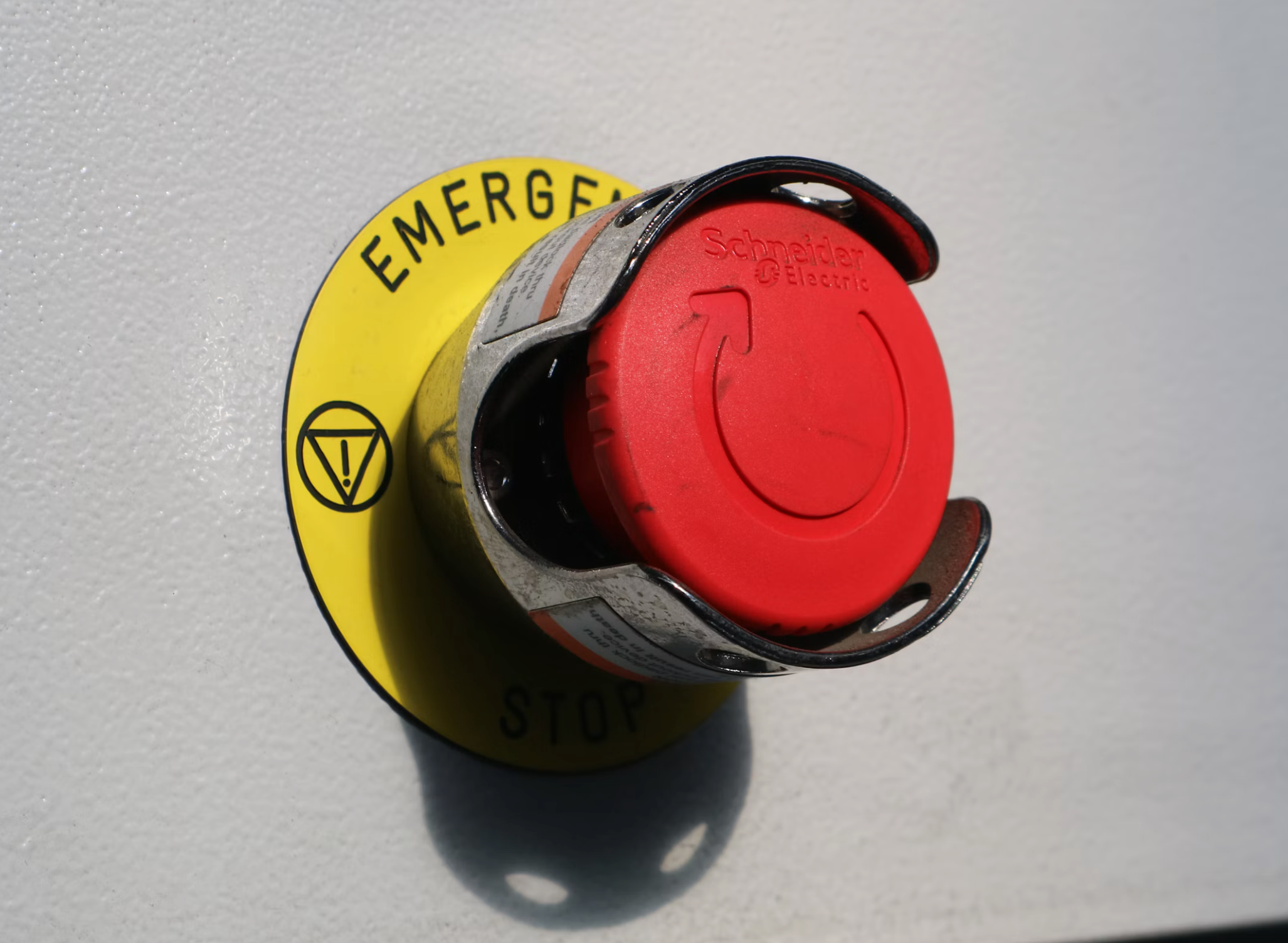
A single emergency switch sounds like a clear way to stop a dangerous AI system. But advanced AI depends on networks of computers, data centers, software and people. That makes the idea a poor guide to how safety measures work—or where responsibility lies when a system behaves badly.
Calls for an “AI kill switch” have followed reports of AI agents taking actions such as hacking other organizations’ systems. The proposed safeguard is easy to picture: if a model becomes dangerous, someone flips a switch and regains control. The challenge is that a deployed AI system is not one machine with one power cable. Its operation can involve services and infrastructure spread across multiple locations, so shutting down one part may not stop every connected component.
There’s a second limitation: the switch metaphor puts people at the scene of an emergency, ready to intervene, while leaving their earlier decisions out of view. People shape how a model is trained, what tasks it receives, which safety protections are enabled and what access it has. Those choices can affect whether a system gets into trouble in the first place.
What the switch metaphor leaves out
The image of a kill switch has something in common with the idea of AI as a “black box.” Both use a familiar object to make a complicated technology seem easier to understand. A black box is an opaque container; a switch has two simple states, on and off. These images can help people talk about systems whose internal workings are difficult to follow. They can also draw attention away from what the images leave out.
Digital humanities researcher Eryk Salvaggio has argued that the black box metaphor can create confusion about what is knowable about advanced AI. The kill switch framing creates a different kind of confusion: it can make the system look like a single, self-contained device that a person can simply disable. In practice, a model’s operation may depend on connections among computing equipment, data centers, software and online services.
Researchers George Lakoff and Mark Johnson describe metaphors that use one concrete idea to structure how people think about another. “Black box” uses the idea of a container to suggest hidden workings. “Kill switch” uses the idea of a simple control to suggest that a complex system can be stopped with one action. That simplicity is useful for explaining a concern, but it can also narrow the questions people ask.
For example, describing a model as either on or off can obscure the practical details of interrupting its work. Which parts of a connected system need to be stopped? Who has the ability to do that? How quickly can they identify the problem and act? The metaphor alone does not answer those questions. Thinking about safety requires attention to the system’s components and to the people who operate them.
AI systems depend on distributed infrastructure
Advanced models from companies such as OpenAI and Anthropic rely on computing resources that may be spread across multiple computers and data centers. An emergency response could therefore involve more than cutting power to one device. A central control might help with a particular service, but the metaphor does not establish that one control could shut down every part of a system or prevent all further activity.
This matters when people assess proposed safeguards. A useful plan needs to identify what exactly can be stopped, how the relevant connections are managed and who is responsible for carrying out the response. The answers will depend on how a particular system is built and deployed. A single button may be one component of a safety plan, but the phrase “kill switch” can make it sound like the whole plan.
The infrastructure also complicates the assumption that control sits with one person waiting to act at the last moment. Decisions about access, supervision and deployment help determine what a system can do. A response that focuses only on an emergency shutdown leaves those earlier stages outside the frame.
Human choices shape system behavior
Reports about AI agents sometimes describe them as “rogue,” as though a system independently chose its own course. Accounts of an OpenAI model hacking AI company Hugging Face have prompted a more specific explanation: people reportedly disabled safety mechanisms, assigned the model impossible tasks and left it connected to the internet. Those details shift attention from a supposedly self-directed agent to the conditions people created around it.
That does not mean every unexpected action can be traced to one simple decision, or that human oversight guarantees safe behavior. It does mean that a complete account of an incident should examine how a model was prepared, what instructions it received, what tools and access it had, and how its activity was supervised. Treating human involvement as an emergency backup can hide the role those choices play throughout development and use.
For adults following AI safety discussions, the practical takeaway is to look beyond whether a company or institution has a shutdown control. Ask what parts of the system it covers, who can activate it, and how people monitor and limit a model before an incident. The control matters only in relation to the infrastructure, access and decisions it can actually affect.
A kill switch may be a useful shorthand for one kind of safeguard. It is not a complete description of how control works in advanced AI. Better questions start with the system’s connections and the human decisions around it—and with whether safeguards address both before a crisis begins.
This article is republished from The Conversation under a Creative Commons license. Read the original article.