Jonathan the Tortoise’s DNA Offers Clues to Long Life, but Not a Human Treatment Yet
A genome study of Jonathan, about 194, found youthful patterns in genes tied to mitochondrial function. The findings offer clues, not proven ways to extend human life.
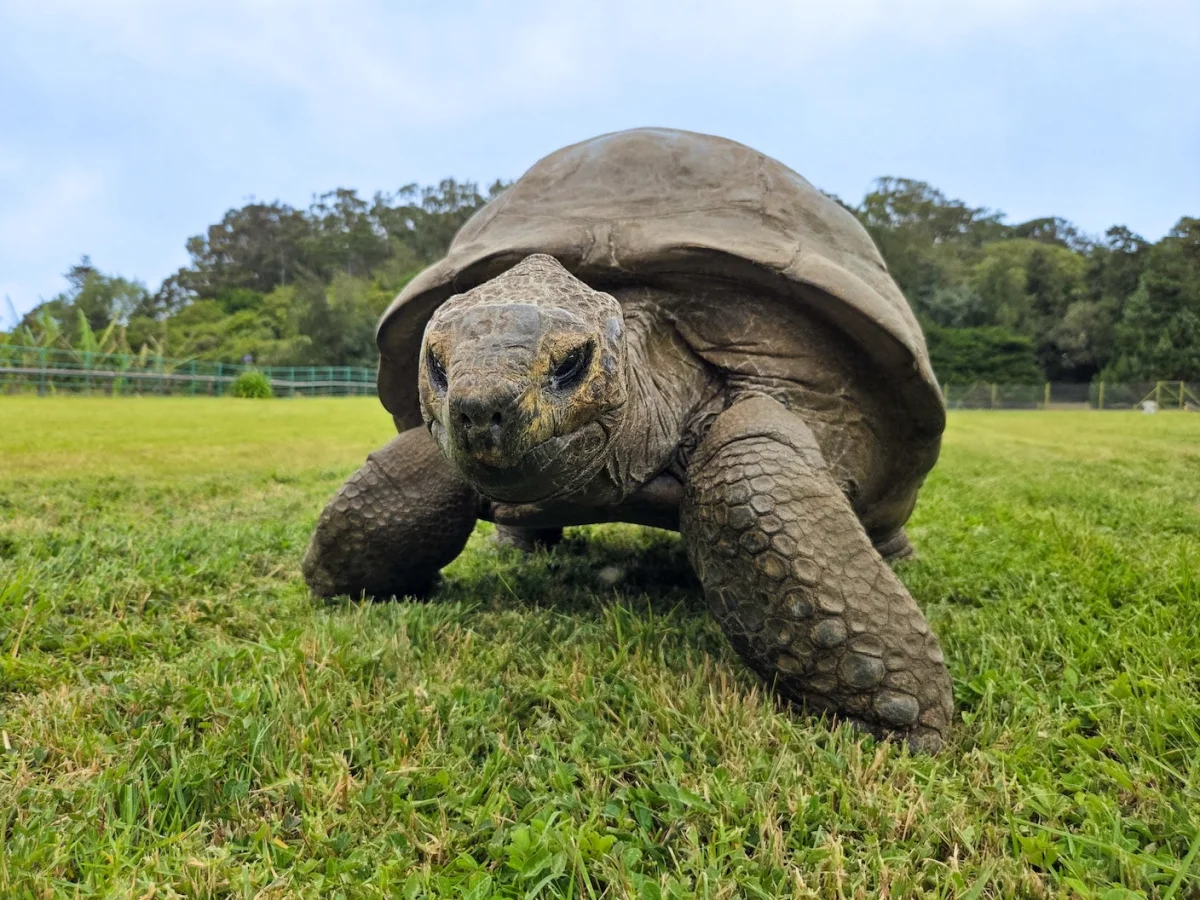
Jonathan’s genome suggests that some parts of his biology have stayed unusually youthful, even as other signs of aging accumulated. The finding comes from a study of the roughly 194-year-old Aldabra giant tortoise, the oldest known living land animal. It offers researchers clues about how long-lived species maintain their cells, but it does not show that the same mechanisms can extend human life.
Jonathan arrived on the island of St. Helena as an adult in 1882. He lives at the governor’s residence, where he has access to fresh food and care from his veterinarian, Joe Hollins. Cataracts have left him blind, but he still eats well and has good hearing. His exceptional age made his DNA a rare opportunity to study how a very long-lived animal’s genome changes over time.
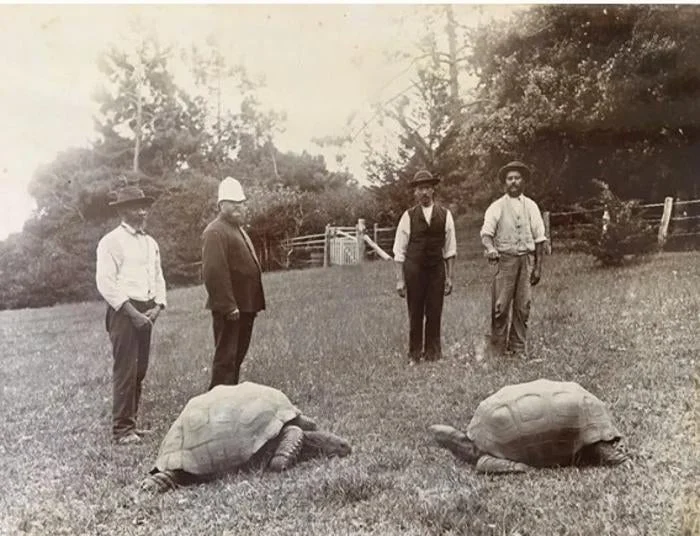
Getting a sample required care. Hollins used fresh greens to coax Jonathan close, then briefly opened his mouth and scraped cells from his cheek. A longer attempt risked a bite from the tortoise’s sharp beak. The team used those cells to sequence his DNA.
What the genome revealed
Cheek cells provide shorter DNA fragments than a blood sample, making the genome harder to assemble. The first reconstruction contained gaps. Researchers filled them using DNA from a younger tortoise, so about 95 percent of the resulting genome came from Jonathan. A blood draw could have offered a clearer sample, but the risk of infection ruled it out.
The team, led by Stephen Clark of the nonprofit Kallel Foundation, compared Jonathan’s genome with those of four Aldabra tortoises roughly a century younger. They identified 287 genes unique to Jonathan. Many are involved in DNA repair or in limiting the shortening of telomeres, the protective ends of chromosomes. Both processes help cells preserve genetic material.
About a dozen of Jonathan’s distinctive genes also overlap with genes linked to longevity in naked mole rats and other long-lived animals. That similarity may point to biological strategies that evolved independently in different species. It doesn’t establish that those genes explain Jonathan’s age, or that they would have the same effects in people.
The researchers also examined epigenetics: chemical marks, including DNA methylation, that help regulate whether genes are active. These patterns tend to become less orderly with age. Some marks fade, while others appear in unexpected places, making gene activity less predictable. Clark describes this growing disorganization as entropy.
Jonathan’s epigenome showed greater overall entropy than those of the younger tortoises, as researchers might expect for an animal of his age. But the pattern varied by gene. Genes involved in mitochondrial function retained a profile that the team compared with that of a five-year-old Aldabra tortoise.
Mitochondria produce much of the energy cells use and are closely linked to aging and age-related disease. The team suggests that preserved mitochondrial function could support DNA repair and help limit epigenetic disruption. This possible feedback loop is intriguing, but the study does not show that mitochondrial health caused Jonathan’s longevity.
The results were published in a study available through Science Advances. They are based on one exceptionally old tortoise and a small comparison group, so they can identify promising patterns but cannot establish which differences are responsible for long life. The sampling and genome assembly methods also leave limits on how confidently researchers can interpret every difference.
Why compare long-lived animals?
Jonathan joins other unusually long-lived species that have helped scientists study aging. Work on short-lived roundworms and fruit flies has identified pathways involved in sensing nutrients, coping with stress and clearing cellular waste. These processes can falter with age.
Hydras offer a different comparison. Some long-term studies found no detectable increase in mortality or decline in reproduction as certain species aged, and the animals retained the ability to regenerate after severe injury. Researchers have suggested that a continuing supply of stem cells and resilience to senescent cells may contribute to these patterns. Those findings describe hydras; they do not mean that other species share the same biology.
Naked mole rats can live for more than 30 years, roughly ten times as long as a mouse of similar size. Researchers have reported that they resist many cancers, maintain heart and muscle function into old age, and rarely develop Alzheimer’s disease despite toxic protein buildup. Studies of their genes have offered clues to how they preserve gene activity and protein stability. A review of these animals’ biology is available in Annual Review of Animal Biosciences, with related work on their genetics and proteins described in Nature, PMC and PMC.
Tortoises have their own research history. A 2019 analysis of Lonesome George, the last known Pinta Island giant tortoise, reported adaptations related to DNA repair, immune function and inflammation. Later work comparing turtle lineages found genetic changes associated with cellular resilience and cancer protection. Jonathan’s genome adds another case for studying what long-lived animals have in common.
“Each of these long-lived species has some kind of special trick,” biologist Steve Austad of the University of Alabama at Birmingham told The New York Times. “And some of those may turn out to be relevant to human aging.”
What it means for people
Genes are only one part of aging. Diet, activity, surroundings and mental health also matter, and Jonathan has benefited from abundant food, a safe home and attentive veterinary care. The study can’t separate the effects of those conditions from his biology.
Research on other exceptional survivors also hints at connections to mitochondrial health. A study of a woman who lived past 117 found clusters of mutated blood cells and signs of DNA damage, while her mitochondria appeared healthier than those of women decades younger. These observations may help researchers decide what to investigate next, but they don’t establish a treatment or personal health strategy.
The team plans to study more Aldabra tortoises and other long-lived animals. Larger comparisons could help clarify which genetic and cellular features are shared across species, and which are specific to Jonathan. For now, his genome is best read as a source of research questions: it points to DNA maintenance and mitochondrial function as pathways to examine, while leaving any practical application for human health uncertain.