Kona Ironman Finish Reversals Show the Limits of Endurance
Taylor Knibb won after a late reversal at Kona, a year after her own race ended in heartbreak. The finish offers no diagnosis of what happened to Solveig Løvseth.
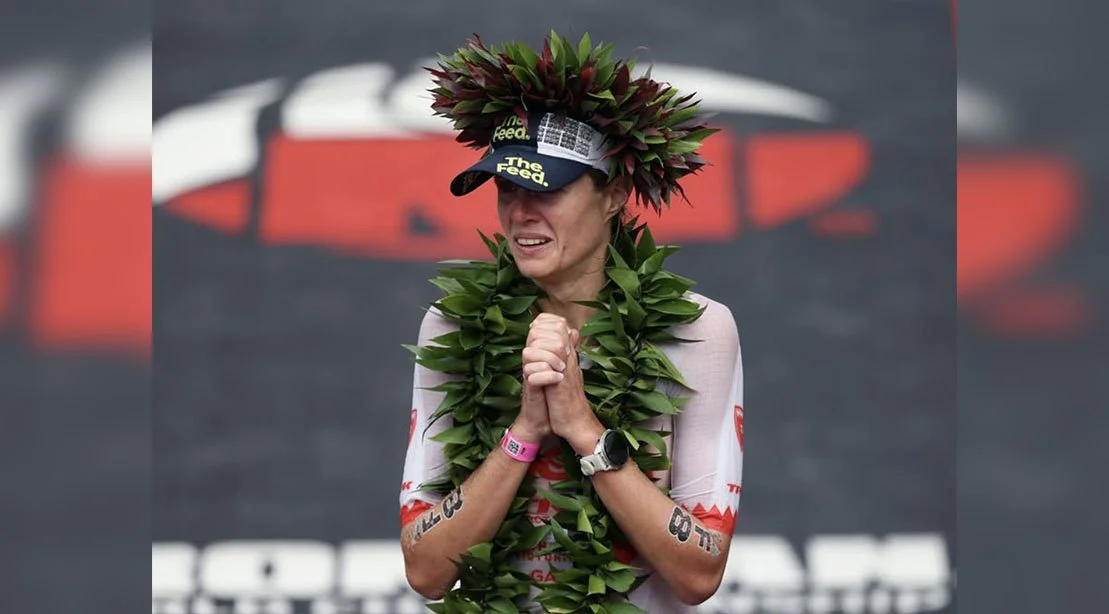
Taylor Knibb’s win at the Ironman World Championship in Kona came after a late change in the lead—and a result that echoed the previous year’s race. Knibb finished the women’s event in 8:36:29. Defending champion Solveig Løvseth had moved ahead with about five miles remaining, but began staggering in the final mile, stopped and fell. Knibb passed her to take the title. Løvseth got back up and finished eighth; Germany’s Laura Philipp placed second and Switzerland’s Julie Derron third.
The reversal was striking because Knibb and Løvseth had occupied almost opposite positions a year earlier. In the 2025 race, Knibb was leading late in the marathon when she faltered and did not finish. Løvseth went on to win. Twelve months later, Knibb finished first as Løvseth struggled near the line. It’s a compelling sporting parallel, but it doesn’t establish that the two athletes faced the same circumstances or physical problem.
An Ironman covers 2.4 miles of swimming, 112 miles of cycling and a 26.2-mile run. The final stretch comes after hours of sustained effort, and the Kona course adds heat as a demanding factor. Even highly prepared competitors can reach a point when pace, coordination or the ability to continue changes abruptly. Preparation can reduce some risks and help athletes manage the event, but it cannot guarantee how a person will respond after that much exertion.
What the finish can—and can’t—tell us
Footage of Løvseth staggering and falling doesn’t reveal why it happened. The source account provides no confirmed diagnosis. Heat exposure, hydration, fueling and accumulated exertion are among the factors that may be considered after a collapse during an endurance event, but observing a race clip isn’t enough to identify the cause. Several factors could contribute, and the athlete’s condition needs proper medical assessment.
That uncertainty matters. A dramatic finish can invite speculation about a particular deficiency or a failure to prepare, but neither can be established from the outcome alone. A collapse during exercise can be serious and warrants prompt medical attention. The account says Løvseth got up and completed the race; that detail doesn’t tell readers what assessment or care she received afterward.
Nor does the result show that one athlete wanted the win more. Knibb had won the 2026 Ironman 70.3 World Championship, a half-distance event. Løvseth was defending the sport’s biggest title. Their credentials and results show that both were capable competitors; they don’t explain what happened to either body in the final miles. The practical lesson is less tidy than a story about willpower: an athlete’s condition can change, and the finish order can turn on what remains possible late in a long race.
A Kona debut ends in a men’s victory
The men’s race also featured a late change in the lead. Vincent Luis of France won in 7:47:27, making his Kona world championship debut at age 37. Luis had competed in the Olympics and won world titles at shorter triathlon distances, and had discussed retiring. In Kona, he passed Denmark’s Magnus Ditlev during the marathon and beat former champion Gustav Iden by about a minute and a half. American Matthew Marquardt finished third.
For the first time since 2019, the professional men’s and women’s championships took place together in Kona. Both races produced late reversals, but two finishes don’t establish a broad rule about endurance sport. They do show how much can change after hours of competition, even among athletes with deep experience and major wins. A lead late in the race is still a lead with miles left to cover.
For people who train seriously, the event is a reminder that endurance depends on more than fitness or determination. Athletes prepare for distance, pacing, equipment, heat and nutrition, yet no plan can promise that the body will keep responding as expected throughout 140.6 miles. If someone becomes unsteady, collapses or appears acutely unwell during exercise, the appropriate response is medical assessment, not assumptions about the cause or pressure to carry on.
Kona’s dramatic finish will invite comparisons between the two years, and the parallel is hard to miss. But the clearest takeaway is about uncertainty: a race can change in its final minutes, while a video of that change cannot explain the medical details behind it. The result belongs in the record; the cause of Løvseth’s collapse remains unconfirmed in the account.