Julius Thomas on Emotional Regulation, Recovery and Life After Football
The former NFL tight end turned clinical psychologist says recovery and emotional skills can support performance through demanding work and major life changes.

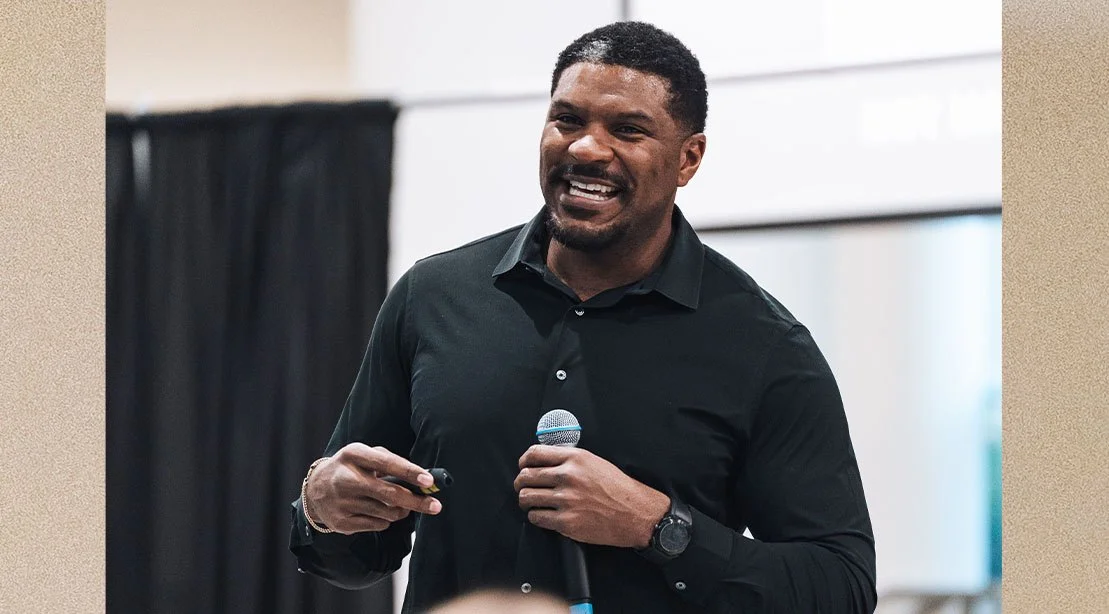
Former NFL tight end Julius Thomas argues that sustained performance depends on skills often overlooked in competitive settings: emotional regulation, recovery and the ability to adapt when life changes. His perspective draws on both a long transition out of professional football and his later training in clinical psychology.
Thomas retired in 2018 and entered graduate school at age 30. He completed a clinical residency and earned a doctorate in clinical psychology in June 2025. The shift from a familiar career, where he had been a two-time Pro Bowl player, to being a beginner again proved difficult. As he put it, moving “from a master to a rookie” meant accepting mistakes and working through a stretch without the steady wins and clear role that football had provided.
Now a performance coach and consultant through Optimal Performance, Thomas works with athletes and business leaders. He says emotional regulation is one of sport’s least addressed performance factors. His view challenges the familiar expectation to keep pushing regardless of strain: people also need ways to recognize stress and recover from it.
Recovery is part of performance
Thomas discussed injury risk in football, where contact is built into the sport. He declined to attribute injuries in the 2026 season to one cause, pointing instead to the many factors that shape risk. Contact injuries are part of play, while training demands, playing surfaces, off-season routines, mobility and recovery may all affect non-contact injuries.
He described football as a sport in which injuries are common, but that observation should not be read as a precise estimate of an individual player’s risk. The article reports that six of 32 quarterbacks initially named starters were hurt early in the season, including Jayden Daniels, Caleb Williams and Jaxson Dart. It also says Philadelphia Eagles quarterback Jalen Hurts was expected to miss the rest of the season after doctors found deep vein thrombosis and bilateral pulmonary emboli, with the case traced to a calf injury involving an opponent’s cleat.
Research also points to a possible role for psychological stress. A 2017 meta-analysis in Sports Medicine linked stress responses with higher injury risk and reported that psychological interventions reduced injury rates. That finding supports attention to mental factors, though it does not establish that stress alone causes injuries or that a particular intervention will prevent them for every athlete.
Thomas uses a simple engine metaphor to explain why constant exertion can take a toll: if someone keeps “flooring it,” the system eventually struggles. Sleep and other forms of recovery help the body shift toward the parasympathetic nervous system, which supports rest-and-digest functions and counters the stress response. His point is that recovery belongs in a performance plan, alongside training, rather than being treated as time lost.

Habits for work and transition
Thomas sees the same pattern among executives who seek ways to sharpen focus while routinely sleeping too little. He developed a framework called “Striving for 100,” centered on five daily areas: exercise, sleep, nutrition, recovery and healthy substance use. Recovery anchors the framework. In individual coaching, he also draws on approaches such as cognitive behavioral therapy and acceptance and commitment therapy, including cognitive restructuring, reframing and radical acceptance.
These methods are intended to help people respond differently to difficult thoughts and circumstances. They are not a substitute for individualized care. People whose sleep, mood or stress is persistently affecting daily life may want to discuss it with a qualified health professional.
Thomas’s own career change has taken longer than he expected. A friend had warned him that a full transition could take about a decade; eight years in, Thomas said he was getting close to where he wanted to be professionally. He pushes back on the idea that athletes can simply separate their identity from the sport. Identity is shaped by daily roles and habits, and by how other people continue to see someone. Thomas noted that people still ask him about his playing days, including the 12 touchdown catches he recorded in both 2012 and 2013.
That mismatch can make it harder to establish a new professional identity. Thomas now helps athletes prepare for that transition by asking whether they have the psychological skills to reframe events, find meaning and build a sense of purpose. He stresses that struggling through a major change is not evidence of personal failure. Transitions are difficult, and support and practical coping skills can make them easier to navigate over time.
Putting feelings into words
Thomas connects emotional strain with physical responses through his studies in psychoneuroimmunology, which looks at links among psychological processes, the nervous system and the immune system. He says that managing emotions may reduce sustained stress on the nervous system. When strain lasts, he has observed that sleep and eating habits can slip and muscle tension can rise. These are broad patterns, not a way to diagnose the cause of any one person’s symptoms.
A 2007 brain imaging study from UCLA, published in Psychological Science, found that labeling emotions dampened the amygdala’s response to negative images. The result suggests that naming a feeling can affect the brain’s immediate response in a laboratory setting; it does not prove that labeling alone treats ongoing distress.
Thomas also points to a gap in help-seeking. The source cites CDC data showing that 10.9% of U.S. men received counseling or therapy from a mental health professional, compared with 16.9% of women. He says people may find it easier to ask for help with physical discomfort than with emotional struggles. His comparison is familiar from his playing career: a sore ankle could take him straight to the training room, while asking for support with thoughts and feelings can seem harder.
Well-being alongside ambition
Thomas is scheduled to speak at Eudēmonia, held November 5–8, with keynote talks on mental health and a panel on mindset, performance and adaptability. He says relationships he formed at an earlier gathering—with people working across psychology, neuroscience, medicine and mind-body practices—continued to influence him afterward.
His practical message applies beyond sport: high performance is more sustainable when well-being and quality of life are part of the routine. For readers facing demanding work or a major life change, that means treating sleep, recovery and emotional support as meaningful parts of functioning well, and seeking professional help when distress is difficult to manage alone.