Five Mobility Exercises That May Help Ease Joint Stiffness
A physical therapist shares five moves for mobility and strength, plus what this exercise routine can and can’t show about joint pain.

Five simple movements can work on strength, flexibility and mobility in areas that often feel stiff: the knees, hips, ankles, back and shoulders. Physical therapist Winnie Yu says stretching may help improve range of motion and ease discomfort, though these exercises aren’t a diagnosis or a guaranteed fix for joint pain.

Age-related changes can contribute to aching or stiffness. Osteoarthritis, for example, involves the gradual breakdown of joint tissue. Cartilage and muscle mass can decrease with age, while the fluid that lubricates joints may also decline. Stiffness can be more noticeable after sitting for a long time. These are possible contributors, not an explanation for every person’s symptoms.
Yu, a physical therapist and clinic director at Bespoke Treatments in New York City, recommends a routine that can be done in full or adjusted to focus on the areas that feel most limited. The suggested schedule is one to two times a week. The routine includes strength and mobility exercises, so it’s more accurate to think of it as general movement practice than as a treatment proven to resolve joint conditions.
Five movements for strength and mobility
1. Glute bridge
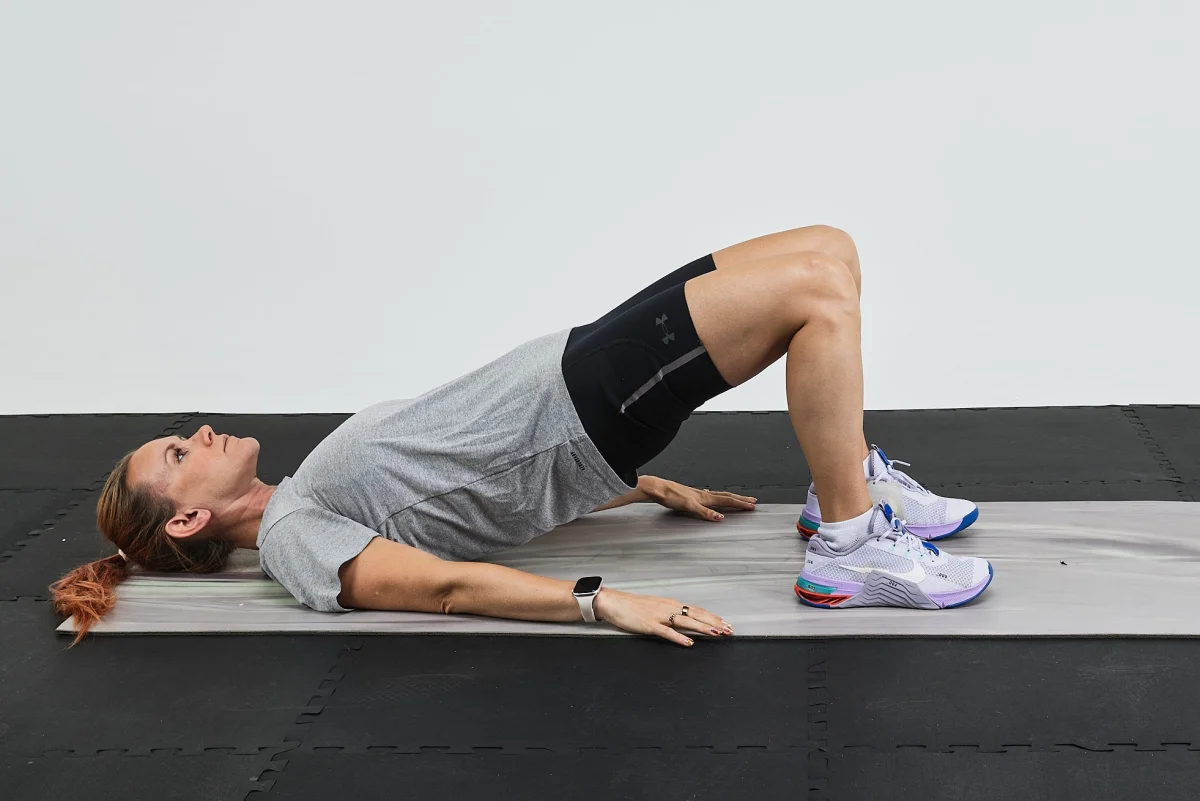
Why it’s included: Strengthening the lower body may support knee function. The bridge works the glutes and other muscles around the hips, with the aim of building strength that helps with movement.
How to do it:
- Lie on your back with knees bent, feet flat on the floor and about hip-width apart.
- Tighten your abdominal and glute muscles, then press your heels into the floor and lift your hips. Stop when your body forms a diagonal line from shoulders to knees; avoid arching through your lower back.
- Lower your hips slowly.
- Repeat 10 times.
2. Lunge stretch

Why it’s included: This movement targets flexibility in the hip flexors and pelvic muscles. Yu describes it as a way to work on hip mobility and range of motion.

How to do it:
- Stand with your feet about hip-width apart, hands on your hips.
- Step your right foot back. Bend your left knee until it’s at roughly a right angle, keeping your balance. Leave your hands on your hips or raise them overhead if that feels comfortable.
- Hold for five seconds, then step forward.
- Repeat on the other side, for 10 repetitions per side.
3. Heel raise
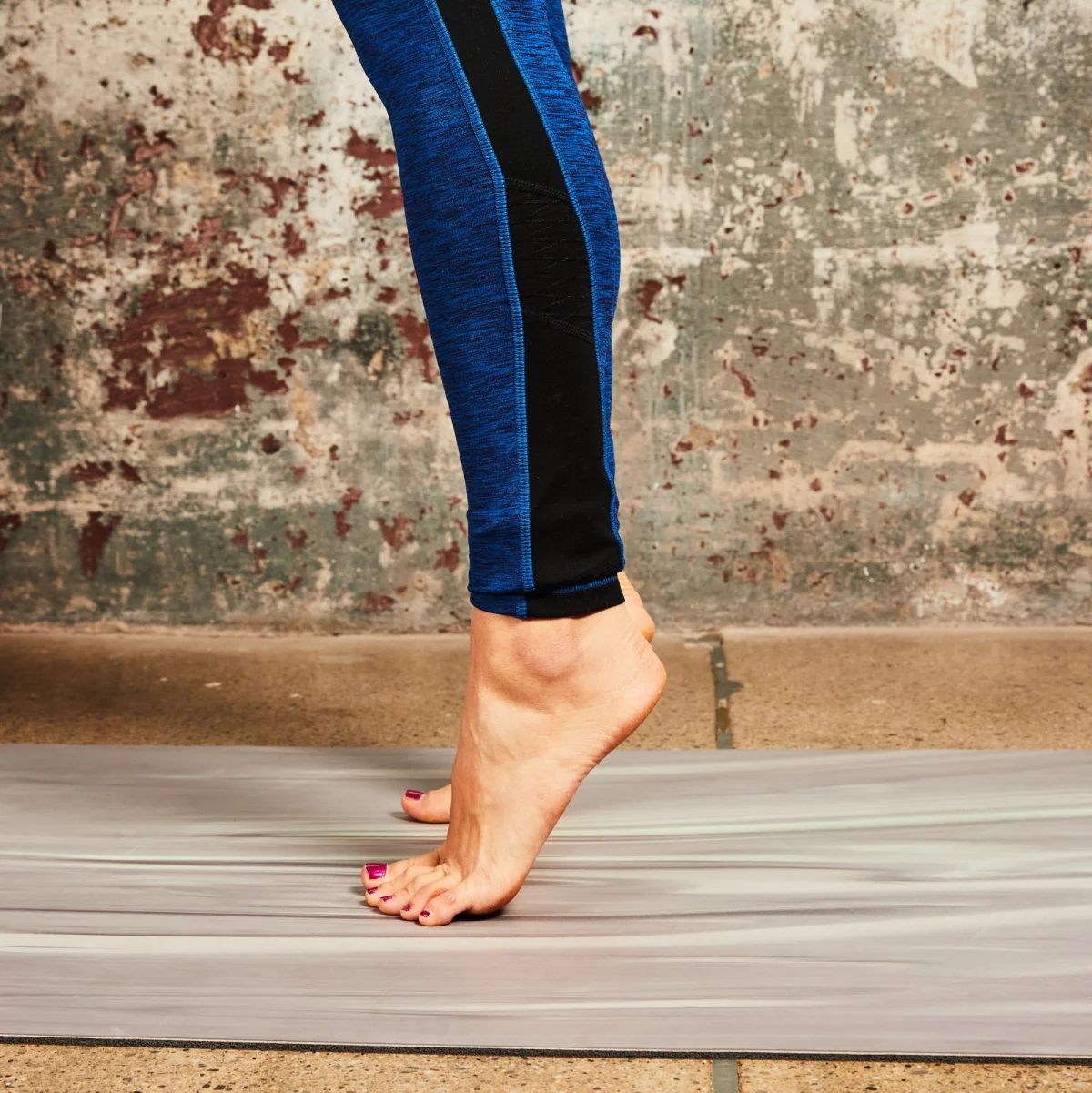
Why it’s included: Raising and lowering the heels works the lower legs and may support ankle strength and balance. Stand near a sturdy chair or wall if you want support while doing the movement.
How to do it:
- Stand with your feet a few inches apart. Use a chair or wall for balance if needed.
- Slowly lift your heels until you’re standing on your toes.
- Pause briefly, then lower your heels under control.
- Repeat 10 times. The source suggests light dumbbells as a possible progression as strength improves, but added resistance isn’t necessary to try the basic movement.
4. Cat-cow

Why it’s included: The alternating positions move the spine through gentle flexion and extension. Yu says the exercise may help with flexibility and range of motion in the back, hips and pelvis, areas that can be involved in lower-back stiffness.
How to do it:
- Start on your hands and knees, with shoulders over wrists and knees under hips. Keep your back level.
- As you inhale, gently arch your back and lift your chest and tailbone for the cow position.
- As you exhale, round your spine, tuck your chin and bring your tailbone toward the floor for the cat position.
- Move between the positions for at least 30 seconds, keeping the motion comfortable.
5. Y shoulder raise

Why it’s included: Raising the arms into a Y shape works on shoulder and upper-back mobility. The movement may help with stiffness and range of motion in those areas.
How to do it:
- Stand with feet hip-width apart and knees slightly bent.
- Hinge forward at the hips, sending your hips back while keeping your back flat and abdominal muscles engaged. Look down and slightly forward.
- Lift your arms into a Y shape, bringing your shoulder blades together. Raise your arms only as far as feels comfortable.
- Pause briefly, then lower your arms.
- Repeat 10 times.
Where this routine fits
Stretching is one part of staying active. Yu also points to cardio, strength training, adequate sleep, hydration and balanced meals that include foods such as leafy greens and berries as parts of general joint-health habits. The source provides no study results or trial data showing that this particular five-move routine prevents joint problems or treats a specific condition; its recommendations come from a physical therapist’s guidance.
Comfort matters when trying any new movement. If a position causes pain or feels difficult to manage, adjust it or stop and ask a health professional for guidance. Persistent, worsening or unexplained joint pain is also a reason to talk with a doctor or physical therapist, who can help assess possible causes and discuss suitable activity. The practical takeaway is to use these movements as a flexible way to work on mobility and strength, while treating ongoing symptoms as something worth discussing with a professional.