Choosing a Home Blood Pressure Monitor: Accuracy, Cuff Fit and Useful Features
A home monitor can show how blood pressure changes over time. Accuracy depends on a validated model, a well-fitting cuff and consistent measuring habits.
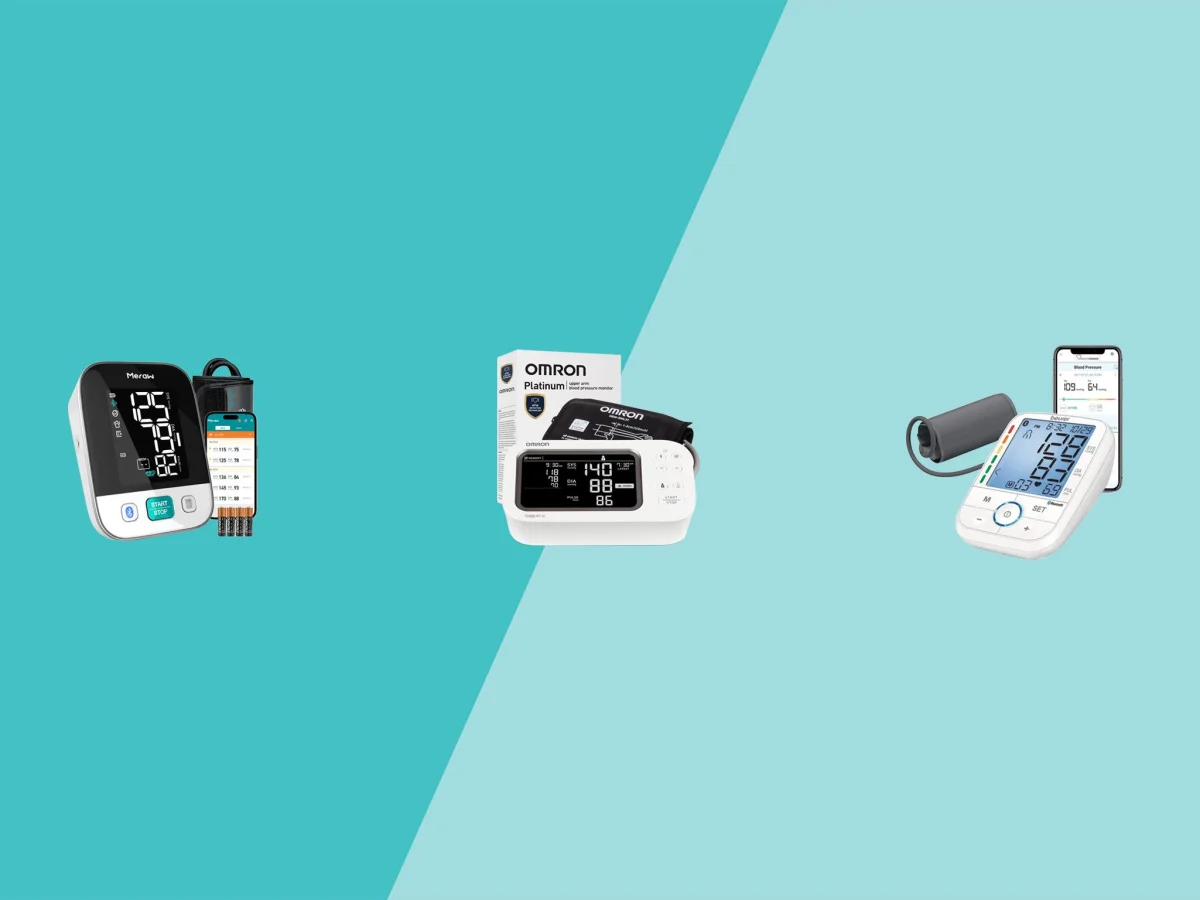
Home blood pressure readings can help people and their clinicians understand patterns that a single appointment may miss. That can matter because high blood pressure often has no obvious symptoms, while anxiety during a medical visit can temporarily raise a reading. Cardiologist Karishma Patwa, M.D., says repeated measurements at different times can give a more representative picture than one reading alone.
That practical value depends on using a monitor that fits and works reliably. The source review describes six options across several needs, from more detailed tracking to simple displays and travel-friendly designs. It does not provide model names for each device, so the useful distinctions here are the features it reports: how the monitor handles repeated readings, cuff size, portability, storage and display.
What the six monitor descriptions offer
For more detailed tracking: The Omron model recommended by the cardiologists in the review takes three consecutive readings over about two minutes and stores results for two users. It can show averages, flag readings that are outside a user’s usual range, and identify signs of an irregular rhythm, including possible early A-fib indicators. The associated app lets users review and share their readings. These alerts are signals to discuss with a clinician, not a diagnosis.
For a simpler, lower-cost option: The review describes an iHealth monitor priced below $50. It runs on batteries, has a straightforward display and connects to an app for more detailed tracking, including alerts about irregular rhythms. Cardiologist Patwa recommends the brand as an option for people seeking a more affordable home device. The article does not identify the particular model, so buyers would need to check the exact device and its listing.
For app connections and averaging: An Omron Silver model is presented as a less expensive alternative to the Omron device with more features. It averages readings, alerts users when results are outside its set range and uses a cuff that inflates around the arm. Its app connections include Apple Health, Google Fit and Alexa-enabled devices. A large display also shows results without requiring someone to open an app.
For a larger upper arm: One monitor in the review comes with an extendable cuff that fits arms up to 22 inches around. That can address a common fit problem: the article says many cuffs accommodate arms only up to roughly 16 or 17 inches. Hem Bhardwaj, M.D., a cardiologist, stresses that cuff size affects accuracy. A cuff that is too small or too large can produce misleading results, so check the maker’s fit range against the measurement of the upper arm.
For travel or easier handling: The review highlights a lightweight Withings model with a minimalist design. It can flag a reading it considers inaccurate and presents color-coded feedback. Some users, however, said its screen was difficult to see in bright daylight. Bhardwaj notes that a lighter monitor may be useful for older adults, people with limited mobility or hand strength, and frequent travelers.
For a backlit screen and flexible power: Another compact model described in the article can run on batteries or plug into power. It stores readings, has a lit screen and is small enough to travel with. A customer review cited in the source praised its setup and data storage, though personal accounts do not establish a device’s accuracy.
For a large display and multiple users: The final description focuses on a monitor with extra-large, well-lit numbers, color-coded indicators and storage for up to 30 readings per person across four users. It also connects to an app. Bhardwaj says clear numbers can make readings easier to record and may help people keep up a regular monitoring routine.
These are feature descriptions, not a substitute for checking the exact model. The article says the reviewed devices were cross-checked against ValidateBP.org for third-party accuracy testing. The source also recommends checking the model’s current listing there before buying, since a brand name alone does not confirm that every device it sells has been tested.
How to choose a monitor
Start with the cuff. Measure around the upper arm and compare that number with the cuff range listed for the specific monitor. As Bhardwaj explains, an ill-fitting cuff can affect the reading. If the standard cuff does not fit, look for a model with a suitable larger cuff rather than assuming it will stretch enough.
Next, consider what will make the device comfortable to use regularly. Some monitors display only the basic result; others store readings, calculate averages or sync with an app. Extra features may be useful for reviewing patterns, but they are not essential for everyone. Emergency physician Katie E. Golden, M.D., says ease of use and confidence with the device matter. A complicated monitor that stays in a drawer is unlikely to help with ongoing tracking.
Portability and readability can also shape the choice. A battery-powered or lightweight unit may suit someone who travels or finds heavier devices awkward to handle. A large, well-lit screen may be easier to read than a phone app. Think about who will use the device, whether several people need separate records, and whether stored readings can be shared with a clinician.
Golden suggests discussing the choice with a doctor if it is unclear which type to buy or if the results seem unreliable. Bringing the monitor to an appointment can allow its readings to be compared with the clinic’s equipment. That comparison can help identify whether the device is giving similar results under the conditions of the visit.
What the numbers mean
A blood pressure reading has two numbers. The upper number, systolic pressure, measures pressure in the arteries while the heart pumps blood. The lower number, diastolic pressure, measures pressure while the heart relaxes and fills between beats. Golden compares the changing pressure to a wave moving toward shore and then receding.
An automatic upper-arm monitor uses a cuff connected to a pump and sensor. The cuff inflates, briefly restricting blood flow, then releases. As the pressure falls, the sensor measures changes in blood flow and the device calculates systolic and diastolic readings. Manual monitors use a cuff inflated by hand and a stethoscope to listen for blood-flow sounds; they are more commonly used by trained health professionals.
The American Heart Association describes a reading below 120/80 as normal for an average, healthy adult, but what is appropriate can vary with a person’s health and other medical conditions. A single reading should not be treated as a diagnosis. Discuss repeated readings or concerns about a result with a health professional.
Taking readings consistently
The cardiologists quoted in the source recommend taking two or three readings in a session to check that results are reproducible. Dr. Ernst von Schwarz says home devices tend to work well when a person’s heart rhythm is regular. He and the other experts caution that finger and wrist monitors are less reliable than upper-arm devices.
For a more consistent measurement, sit quietly and rest before using the monitor. Avoid taking a reading immediately after exercise, coffee or a stressful moment, since these can affect blood pressure. Follow the device’s instructions for posture and cuff placement. If you take blood pressure medication, the source recommends waiting at least an hour after taking it before measuring; ask your clinician or pharmacist how timing should fit your own care.
Home monitoring is most useful as a record of readings taken under similar conditions and shared with a clinician when appropriate. A validated device, a correctly sized cuff and a routine you can follow make that record more informative than a single number on its own.